
Key Takeaways
Sheer shades bring soft daylight, a lighter visual feel, and flexible privacy to many rooms. The right fabric and operating system matter just as much as the color.
- Sheer shades filter sunlight instead of shutting it out.
- They offer daytime privacy, but usually need help after dark.
- Fabric opacity should match the room’s purpose.
- Motorization can simplify hard-to-reach windows and daily routines.
- Careful measuring and professional fitting help avoid costly mistakes.
What are sheer shades?
Sheer shades are window coverings made with lightweight, translucent fabric that softens incoming light. They sit between the openness of a sheer curtain and the structure of a traditional shade. The result is a room that feels brighter without the sharpness of direct sun. Before choosing a style, think about how much view, privacy, and darkness you need at different times of day.
How sheer shades are designed
A sheer shade uses delicate fabric to create a gentle visual layer over the glass. Depending on the design, the material may hang as a continuous panel or work with fabric vanes that adjust across the window. This construction gives the shade a tailored appearance while keeping the window from feeling visually heavy.
The goal is not total separation from the outdoors. It is a measured buffer that adds softness and makes a bare window feel finished.
How they filter and diffuse natural light
Instead of stopping sunlight at the glass, sheer fabric spreads it through the room. That diffusion reduces the hard contrast caused by bright windows and can make screens more comfortable to view. Even on an overcast day, the room can retain a sense of openness.
For a closer look at this effect, light-diffusing sheer shades are a useful starting point when comparing styles. The key distinction is simple: these treatments filter light rather than block it.
How they differ from curtains and traditional blinds
Curtains can add fullness, pattern, and drama, but they often need wall space beside the window. Traditional blinds offer more defined slat control, though their horizontal lines can feel more utilitarian. Sheer shades take a middle path, pairing a clean fitted profile with the softness of fabric.
They also tend to keep the window visually calmer when raised or partially open. If you want a polished treatment without a heavy frame around the glass, that balance can be appealing.
Common fabric, color, and texture options
Options range from cool whites and warm ivories to gray, taupe, and deeper neutral tones. A tighter weave may provide a more finished look, while a delicate texture can make the light feel especially soft. Opacity is just as significant as color, so order samples when possible and view them in both morning and afternoon light.
A calm neutral usually works well in an open-plan room. A more noticeable texture can give a bedroom or dining area the visual interest that pattern might otherwise provide.
The main benefits of sheer shades
The appeal of sheer shades is practical as well as visual. They can brighten a room, soften glare, and preserve a connection with the outdoors. They are especially useful when a solid treatment would make a space feel closed in. The trade-off is that they are not designed to provide complete privacy or darkness on their own.
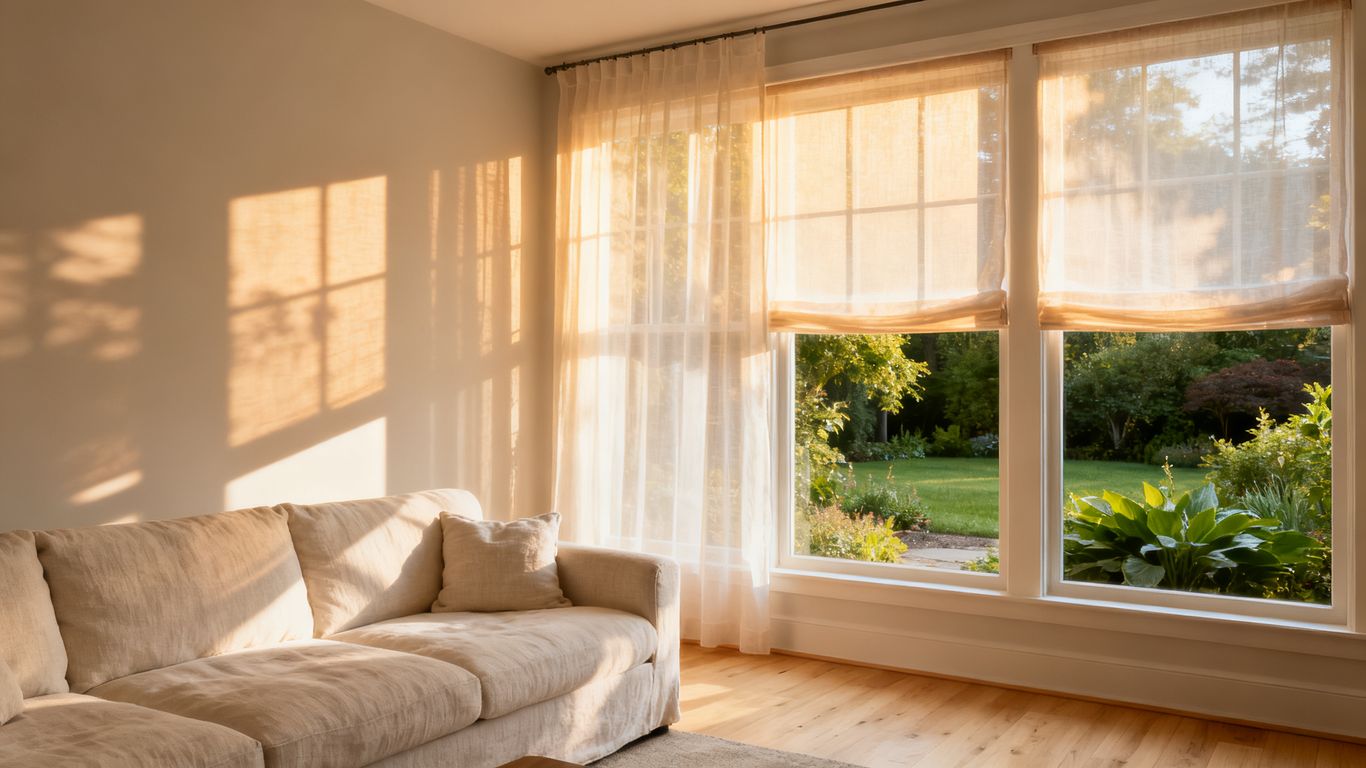
Creating a soft, airy atmosphere
Translucent fabric gives daylight a gentle quality that solid materials cannot quite replicate. It can make a smaller room feel more open and keep a large room from feeling stark. In living and dining spaces, that soft glow works with both casual and formal furnishings.
The effect is subtle rather than showy. A softer room often feels larger, simply because the eye is not pulled toward harsh lines and bright patches.
Reducing glare without blocking daylight
Direct sun can make a room uncomfortable, particularly during bright afternoon hours. Sheer shades temper that intensity while leaving natural light in place. This is useful near televisions, reading chairs, and dining tables where glare can quickly become distracting.
They will not eliminate every reflection or hot spot. Still, they offer a comfortable middle ground for homeowners who want daylight without the squinting.
Preserving outdoor views
Because the fabric remains visually light, sheer shades can keep a garden, tree line, or street view present during the day. This matters in rooms where the window is part of the architecture. A treatment should solve a privacy or glare problem without making the glass disappear.
The custom sheer shade collection is worth exploring when a fitted look and preserved view are both priorities. At night, however, interior lighting changes the privacy equation, so the view benefit should be considered alongside evening coverage.
Protecting furnishings from harsh UV exposure
Sunlight can gradually fade wood floors, upholstery, rugs, and artwork. A sheer layer reduces the intensity reaching the room, although the amount of protection depends on the fabric and window exposure. South- and west-facing windows often deserve particular attention.
For especially sunny rooms, compare the fabric’s performance with the value of what sits near the glass. Moving treasured furnishings farther from direct sun can help too, but the window treatment remains the first line of defense.
Privacy and light-control considerations
Sheer shades are best understood as a filter, not a solid wall. They can soften silhouettes and reduce the feeling of exposure during the day, but they do not create the same privacy as a room-darkening or opaque treatment. Your street view, window height, and interior lighting all affect the result. A thoughtful plan may use one shade alone in some rooms and a second layer elsewhere.
What privacy to expect during the day
In daylight, sheer fabric generally provides low to moderate privacy. People outside may see light, movement, or vague shapes, especially when they are close to the window. That may be enough for an upper-floor living room or a window facing a private yard.
For a street-facing room, test a fabric sample from outside if possible. Privacy is not only about the material; it is also about distance, angle, and what is visible through the glass.
Why nighttime privacy requires extra planning
Once the lights are on inside, the room can become more visible from outside. The same translucent quality that feels open during the day may reveal silhouettes after dark. This is the most common surprise for people choosing sheer shades without considering their evening routine.
Bedrooms, bathrooms, and front-facing rooms often need a second layer. Drapery, a room-darkening shade, or another compatible treatment can close the gap when privacy matters most.
Choosing light-filtering versus room-darkening fabrics
Light-filtering fabric is a good fit when you want a bright room with softened glare. Room-darkening fabric is better for sleep, movie watching, or spaces where afternoon sun is especially strong. Blackout materials go further by blocking virtually all light, but they change the room’s daytime character.
Use the room’s primary job as the deciding factor. A bright living room and a nursery do not need the same level of openness, even if their windows face the same direction.
When to layer sheer shades with drapery or other treatments
Layering adds flexibility without giving up the soft daytime look. Leave the sheer shade open or lightly adjusted for daylight, then close drapery when you need stronger privacy, darkness, or a more insulated feel. The second treatment can also introduce color and texture around a large window.
This approach works particularly well in bedrooms, media rooms, and street-facing living areas. It is usually more versatile than asking one delicate fabric to solve every lighting problem.
Choosing sheer shades for every room
The best sheer shade is the one that supports how a room is used. Start with the daily pattern: when does sunlight enter, when do people need privacy, and does the room need darkness? Window size and furniture placement matter too. A beautiful fabric can still feel wrong if it leaves a television washed out or a bedroom exposed at night.
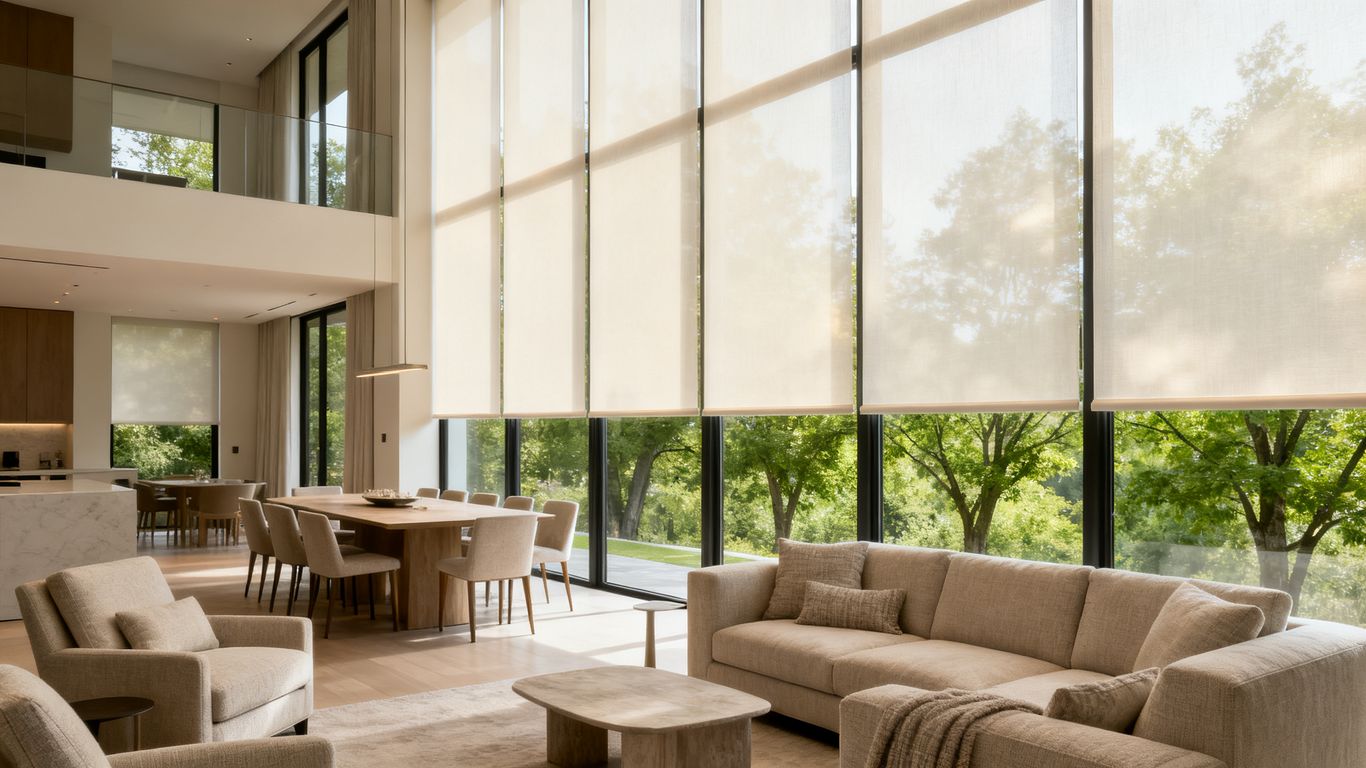
Living rooms and dining areas
These spaces are natural candidates for sheer shades because they benefit from daylight and a relaxed sense of openness. A warm neutral can blend with upholstery, while a subtle weave adds finish without competing with artwork. For a dining room, consider how low evening light and overhead fixtures will affect privacy.
Sheer shades also suit rooms where the view is part of the experience. Keep stronger coverage available if the windows face neighbors or a busy walkway.
Bedrooms and nurseries
A bedroom may look lovely with a sheer layer but still need more darkness for sleep. Consider pairing it with room-darkening coverage, especially for children’s rooms and windows that receive early morning light. Cordless or motorized operation can also reduce clutter around a crib or bed.
The daytime layer can remain gentle and bright while the second treatment handles naps and nighttime privacy. That separation makes the room easier to use throughout the day.
Home offices and media rooms
In an office, glare control is often more important than complete darkness. Sheer shades can soften bright windows while keeping the room welcoming for video calls and work. In a media room, however, room-darkening fabric or layered drapery may be necessary for a more comfortable screen experience.
The useful question is not whether the shade looks good in an empty room. It is whether you can work, read, or watch comfortably at the hours you actually use the space.
A short visual demonstration can help you understand how fabric position and light direction change the room. Use it as a supplement to samples, not a replacement for seeing materials in your own windows.
Sunrooms and spaces with large windows
Sunrooms can become bright and hot quickly, while large windows may be difficult to operate by hand. Sheer shades preserve the open character of the space, but fabric selection should account for strong exposure and the value of nearby furnishings. On very wide expanses, divided shades may be easier to control than one oversized unit.
For broader projects, large-window shade planning can help frame the questions around view, light, and operation. Measure the architecture carefully before settling on a layout.
Customization and convenience features
Customization is where a good-looking idea becomes a workable treatment. Fabric, opacity, mounting, and control style all change how the shade behaves. The goal is not to add features for their own sake. It is to make daily adjustment simple and make the finished treatment look intentional.
Selecting the right color, weave, and opacity
Color should relate to the walls, flooring, and furnishings, but it also changes how light feels. White and ivory fabrics keep the look crisp, while taupe and gray can feel quieter and more grounded. A visible weave adds dimension, especially when the surrounding room uses smooth finishes.
Opacity deserves equal attention. A fabric that looks nearly transparent in a showroom may feel different against a bright window, so compare samples in place and at several times of day.
Cordless lift systems for a cleaner, safer design
Cordless operation removes dangling cords and creates a simpler line across the window. It can be a sensible choice in homes with children or pets, and it keeps the treatment from looking busy. The lift should still feel easy to use, particularly on frequently adjusted windows.
For small and medium windows, cordless control is often all the convenience needed. Larger or harder-to-reach windows may call for a motorized option instead.
Motorized shades and smart-home integration
Motorized shades can be adjusted with a control, and documented smart-home options may allow operation through an app or connected system. Made in the Shade describes motorized options as a way to make light control more effortless, particularly for large, high, or hard-to-reach windows. Keep the decision practical: automation is most useful when windows are numerous, elevated, or adjusted on a routine.
Made in the Shade also presents smart-home automation as a way to schedule shade operation based on daily routines, time of day, or sunlight levels. That can make a noticeable difference in a room where manual adjustment is easy to forget.
Solutions for large, tall, and specialty-shaped windows
Large expanses, arched windows, skylights, and tall glass often need a more careful plan than standard rectangular windows. Consider how the shade will be supported, divided, and operated before focusing on fabric. A custom approach can also account for unusual angles and limited access.
For comparison, 3" Vane Sheer Shades offer a vertical-oriented option with fabric vanes and choices such as cordless or continuous-loop lift. Specialty windows still need precise measuring and a clear understanding of what the treatment can and cannot cover.
How to choose, install, and maintain sheer shades
A successful installation begins before the fabric is ordered. The window must be measured correctly, the room’s needs should be clear, and the operating system has to suit the opening. Small decisions made early affect appearance and everyday comfort. Take your time here; replacing a poorly chosen treatment costs more than planning well.
Measuring windows for a proper fit
Measure width and height in several places because older homes may not have perfectly square openings. Decide whether the shade will mount inside or outside the frame, then account for handles, trim, molding, and window operation. Doors and deep sills may require a different mounting approach.
Write down the smallest relevant width for an inside mount and check clearance before ordering. For a broader home-improvement perspective, window installation can also clarify how the opening itself affects comfort and finish.
Matching the shade style to your interior
Let the room’s architecture lead the design. Minimal interiors may benefit from a quiet neutral and a clean cassette, while traditional rooms can handle more texture or a layered treatment. Repeat a color already present in the room rather than choosing a shade in isolation.
It helps to compare three directions: a simple blend, a slightly contrasting neutral, and a textured statement. The best choice is usually the one that still feels right after the trend has passed.
Deciding between professional and DIY installation
DIY installation can work for straightforward windows when you are comfortable with careful measuring, brackets, and leveling. Professional installation becomes more valuable with tall windows, multiple treatments, specialty shapes, or motorized systems. It also helps when a consistent finish matters across several rooms.
Before deciding, consider the cost of a mistake as well as the installation price. A treatment that is technically mounted but uneven, difficult to operate, or poorly aligned is not a good value.
Cleaning fabrics and maintaining smooth operation
Dust fabric gently with a soft brush attachment or follow the manufacturer’s cleaning directions. Avoid soaking delicate materials unless the care instructions specifically allow it. Check that brackets remain secure and that the shade moves without catching or pulling to one side.
A simple maintenance routine usually includes:
- Dusting the fabric regularly with low suction.
- Removing small marks with the approved spot-cleaning method.
- Checking chains, cords, or controls for smooth movement.
- Keeping nearby vents and damp areas from directing moisture at the fabric.
These small habits protect the appearance and help reveal an operating issue before it becomes a larger repair. For general exterior preparation questions, power washing is a separate consideration; it should never be directed at delicate interior window fabrics.
Evaluating durability, warranties, and long-term value
Ask what the warranty covers, how repairs are handled, and whether replacement parts or service are available. Durability depends on fabric, exposure, frequency of use, and how well the shade is maintained. A lower initial price is not automatically better if the treatment does not suit the window or needs early replacement.
Made in the Shade offers professional measuring and installation services as part of its custom window-treatment approach. When comparing proposals, look at the full process, including fit, support, controls, and the finish you expect to live with every day. You can also book an appointment when you are ready to review options in the home.
Conclusion
Sheer shades are a strong choice when you want daylight, a softened view, and a lighter visual finish, but they work best when their privacy and darkness limits are understood. Choose fabric and control features around each room’s real routine, then measure carefully and layer treatments where needed. The right shades bring the showroom decision back to your own windows, where comfort and finish matter most.
Frequently Asked Questions
Do sheer shades provide privacy?
They generally provide low to moderate daytime privacy by softening views and silhouettes. They usually do not provide complete privacy at night when interior lights are on.
Can sheer shades block sunlight?
They filter and diffuse sunlight rather than fully blocking it. Choose room-darkening or blackout coverage when substantial darkness is needed.
Are sheer shades suitable for bedrooms?
Yes, but bedrooms often need a second layer for sleep and nighttime privacy. Room-darkening drapery or another compatible treatment can provide that extra coverage.
Do sheer shades reduce glare?
They can reduce harsh glare while allowing daylight to remain in the room. The amount of reduction depends on the fabric, window direction, and intensity of the sun.
Can sheer shades be motorized?
Many custom shade systems offer motorized operation. It can be particularly useful for large, high, or hard-to-reach windows and for scheduled daily adjustments.
How should sheer shades be cleaned?
Dust them gently with a soft brush attachment and follow the fabric manufacturer’s care instructions. Avoid harsh cleaners and excessive moisture unless specifically permitted.
Should sheer shades be installed inside or outside the window frame?
Either mount can work. Inside mounts create a streamlined appearance when the frame has enough depth, while outside mounts can cover trim and reduce visible gaps around the window.