
Key Takeaways
Commercial blinds work best when they solve the real needs of each room, rather than applying one treatment everywhere.
- Start with how people use the space and where sun, glare, or privacy gets in the way.
- Compare shades and blinds by the kind of light control and view they provide.
- Match material and opacity to the room’s use, upkeep needs, and furnishings.
- Treat motorization as a practical choice for access and ease, not a feature to add by default.
- Accurate measuring, professional installation, and warranty details all affect long-term value.
Start with your space and its everyday needs
Before looking at styles, notice what is and is not working in the space now. A sunny conference room has different needs from a street-facing waiting area or a retail window meant to catch the eye. Start with the daily routines, then consider the windows themselves. That makes it easier to choose commercial blinds that feel considered rather than generic.
Identify where glare, heat, or privacy is a concern
Spend time in the room at different points in the day. Morning sun may land directly on computer screens, while afternoon light can warm a lobby or wash out display colors. In other rooms, the bigger concern may be visibility from outside. These room-by-room priorities help narrow the options before you compare fabrics or finishes.
A simple walk-through can turn vague complaints into useful requirements. Note which conditions matter most, and whether the need changes during the day:
- Glare on monitors, presentation screens, or merchandise
- Direct sunlight that makes a space feel uncomfortable
- Views into private work areas or visitor spaces
- Daylight that should remain without the harsh brightness
Once the problem is clear, it is easier to judge whether a treatment should soften light, preserve a view, or provide stronger coverage. Some rooms may need more than one answer.
Consider how employees, customers, and visitors use each room
A window treatment should support the work happening around it. In an office, employees may need steady daylight without screen glare; in a reception area, visitors may value privacy and a calm atmosphere. Retail windows have another role: they are part of the customer’s first impression. Think about who uses each room and what a useful level of light and privacy looks like for them.
Note window sizes, shapes, and exposure to direct sunlight
Write down whether the windows are narrow, wide, unusually shaped, or hard to reach. Also note which direction they face and when direct sun comes through. This information matters because two rooms with similar decor can need different coverage if one has a large, sunlit window and the other has a shaded opening. For projects with several window types, a consistent look can still be achieved with treatments selected for each opening.
Compare commercial blind and shade styles
Blinds and shades solve light-control problems in different ways, so it helps to compare how they behave rather than choosing by appearance alone. Some options soften the sun while leaving the view open; others offer more privacy or darkness when closed. Consider the commercial blind options available for busy spaces, then match a style to the room’s daily use. A showroom, meeting room, and private office may not need the same treatment.
Choose solar shades to reduce glare while preserving views
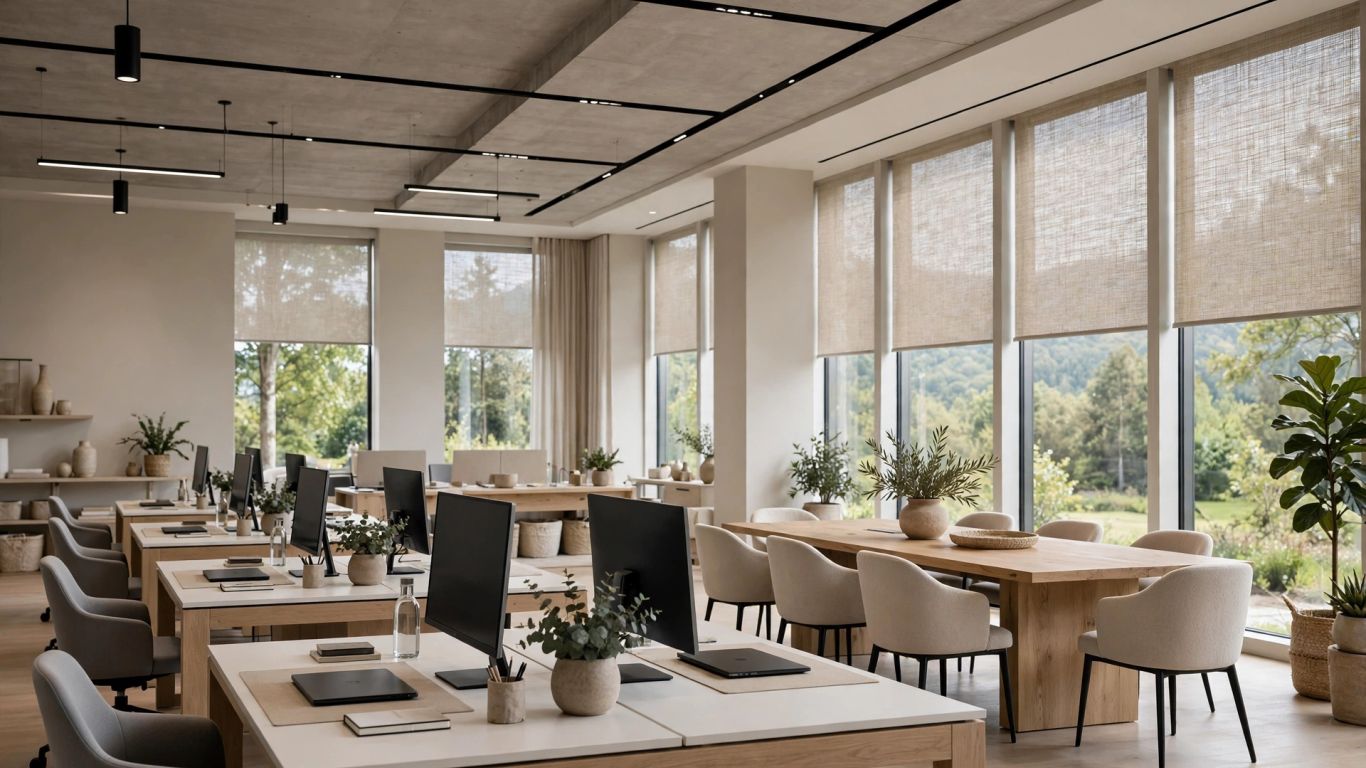
Solar shades are worth considering when harsh light is the main problem but you still want to see outside. For a commercial example, Made in the Shade lists Office Solar Shades as a clean-look option for offices and showrooms, with glare reduction while keeping the view. Its product information also says these shades reduce harsh sunlight by up to 99% and block harmful UV rays. The balance between light control and visibility makes them a natural fit for spaces where a fully covered window would feel too closed in.
Consider roller shades for flexible light control and blackout options
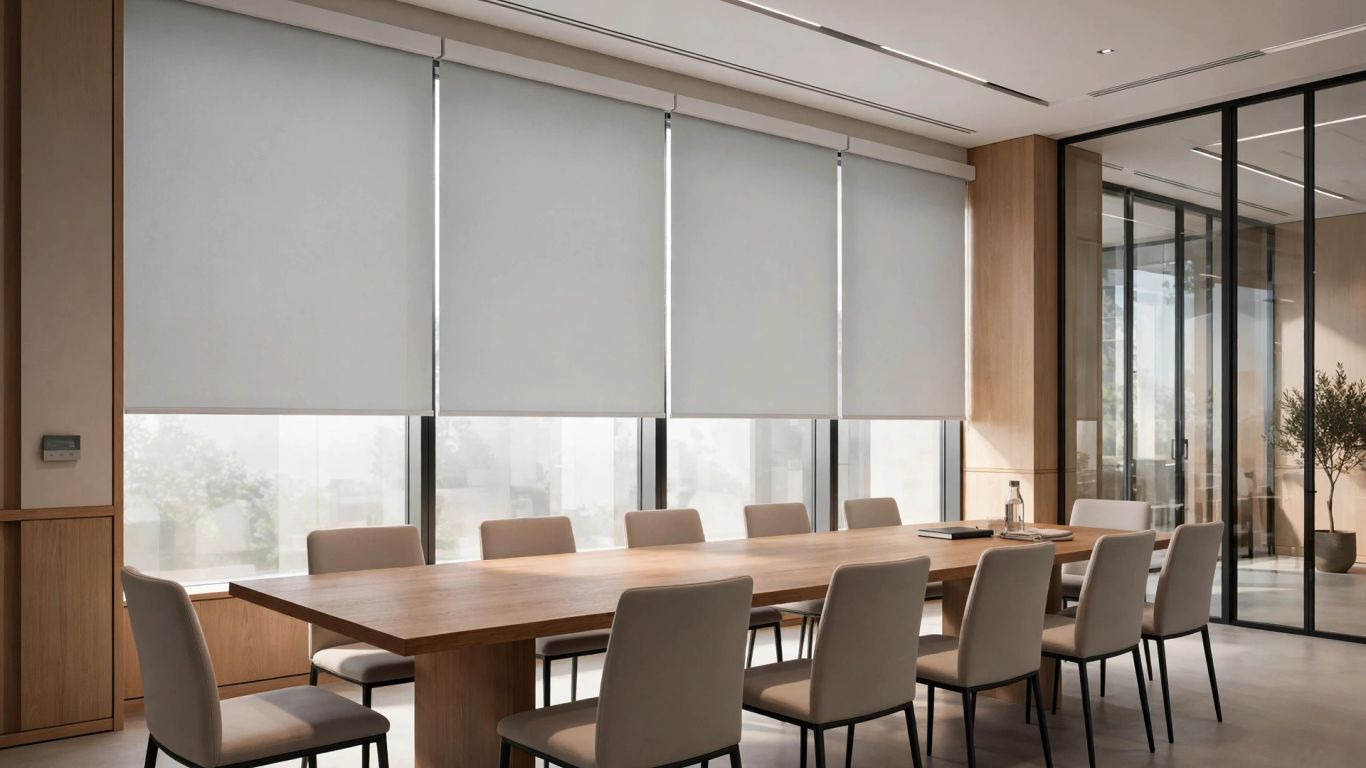
Roller shades offer a simple profile and can suit rooms that need a clean, uncluttered finish. The right fabric depends on the job: a light-filtering choice can soften daylight, while blackout coverage can help when a room needs stronger control. Made in the Shade’s commercial information describes roller shades for large picture windows where light control is needed for presentations, and suggests blackout shades with side channels as an option. Confirm the coverage needed for the specific room before settling on a fabric.
Explore horizontal or vertical blinds for adjustable light and privacy
With horizontal blinds, the slats can be tilted to adjust light and privacy without fully raising the treatment. The commercial options described by Made in the Shade include aluminum, vinyl, and all-natural wood. Vertical blinds are another possibility for wide windows and sliding doors; their adjustable slats provide light and privacy control. The choice often comes down to the opening, the look you want, and how frequently people will adjust the treatment.
Use printed screen shades to incorporate branding or imagery
A shade can do more than cover glass in a customer-facing space. Made in the Shade Commercial Solutions describes printed screen shades as a way to put branding, photography, or a message on a window covering. That may suit a storefront, showroom, or reception area where the window is part of the visual experience. Keep the design in step with the room, so the imagery supports the space rather than competing with it.
Match materials and opacity to the job
Material affects the look and the practical feel of a window treatment, while opacity determines how much light passes through. Neither choice should be made in isolation: a conference room may need a different balance from a public waiting area. Consider the expected wear, the cleaning routine, and what the room needs from daylight. A useful comparison is to begin with the main purpose, then assess finish and maintenance.
Compare aluminum, vinyl, wood, and fabric options
Aluminum, vinyl, wood, and fabric each create a different visual impression. Aluminum can read clean and straightforward; vinyl offers another practical blind material; wood brings a natural finish, while fabric can soften the look of a room. The commercial horizontal blind options from Made in the Shade include aluminum, vinyl, and all-natural wood. Ask to compare samples in the actual space, since surrounding colors and daylight can change how a finish appears.
Select light-filtering, room-darkening, or blackout coverage
Opacity is easier to choose when you connect it to a specific task. A light-filtering shade may preserve a bright, open feeling; room-darkening coverage can reduce brightness further; blackout options are useful when presentations or other activities call for stronger light control. This quick guide can help frame the conversation:
| Coverage | What it generally suits | Consider before choosing |
|---|---|---|
| Light-filtering | Spaces where softened daylight is welcome | Whether direct sun still creates glare |
| Room-darkening | Rooms that need reduced brightness | Whether some daylight should remain |
| Blackout | Presentations or activities needing very low light | How much coverage the window edges require |
Think about the room’s use at the time of day when light is most disruptive. A sample or consultation can help confirm whether the selected opacity feels right in person.
Weigh durability and upkeep in high-traffic areas
In a busy corridor, waiting room, or shared workspace, a treatment may be adjusted often and handled by many people. Choose a style that suits the expected use and ask how its material should be cleaned. A finish that looks excellent but needs more attention than the team can give it may not be the practical choice. Simple upkeep is part of a polished result.
Check UV protection for furniture, flooring, and equipment
Sunlight can affect furnishings and finishes over time, so consider which assets sit close to the windows. Ask whether a proposed shade provides UV protection and how much view or daylight it retains. The right balance depends on the room: a display area may need a different mix of visibility and protection than a private office. Compare product information rather than assuming all screen or shade fabrics perform alike.
Consider motorization and convenient controls
Motorization can make daily adjustments easier, particularly when windows are large, numerous, or difficult to reach. It is not automatically the right answer for every opening, though. First decide how often the treatment will move and who needs to operate it. Then compare the available control methods and the project requirements with the installer.
Choose between remote, wall-switch, and app-based operation
Control preferences vary from one workplace to another. A remote may suit a single room, while a wall switch may be easier for shared use; app-based controls are another option to discuss if they fit the project. Confirm exactly what a particular system supports before making a decision. The simplest control that employees can use comfortably is often the most useful one.
Add scheduled controls for consistent daylight management
Some businesses may want window treatments to move at set times, while others prefer staff to adjust them as needed. If scheduled operation matters, ask whether it is available for the selected system and how schedules can be changed. There is no need to automate a routine that rarely changes. A clear plan helps keep controls useful rather than confusing.
Plan for smart-home or building-system integration
If a building already uses a control system, raise that early in the planning process. Compatibility is specific to the equipment and products involved, so do not assume an integration will work without confirmation. Ask what information the installer needs and whether any additional components or setup are required. Sorting this out before ordering can prevent surprises later.
Compare manual and motorized options for large or hard-to-reach windows
Manual operation may be perfectly practical for a smaller opening that is adjusted occasionally. For wide or high windows, motorization can be more convenient; Made in the Shade’s commercial information notes motorization as an option for conference roller shades. This short video can help you see the kinds of operation to compare before discussing a specific system.
Consider reach, frequency of use, and the number of treatments involved. Those everyday details are a better guide than choosing motorization simply because it is available.
Tailor window treatments to each business setting
The same building may contain rooms with very different expectations. An office needs comfortable working light, a waiting room should feel calm, and a retail space has a visual role as well as a practical one. Treat each setting on its own terms, then look for a finish that connects the overall design. This keeps function in focus without making the interior feel piecemeal.
Reduce screen glare in offices and conference rooms
Screens are often the first place people notice a light-control problem. Solar shades may help reduce glare while preserving a view, while a conference room used for presentations may call for stronger coverage. Before selecting a shade, check where monitors and screens sit relative to the windows. A small change in placement can also help, but the treatment should still work for the room as a whole.
Manage sunlight and privacy in waiting rooms
Waiting areas need to feel welcoming, but direct sun or clear views from outside can make them less comfortable. Consider how much daylight should remain and whether people seated near the windows need additional privacy. A lighter-filtering treatment may be enough in one setting; a more covering option may suit another. The best choice supports a settled atmosphere without making the space feel closed off.
Create a polished, inviting look in retail and customer-facing spaces
In retail and reception areas, window treatments contribute to the first impression. Choose a color and texture that work with the interior, and decide whether the window should draw attention or recede into the background. Printed screen shades can also carry branding or imagery, where that suits the design. Keep practical light control in the picture, especially if merchandise or seating is exposed to direct sun.
Choose coverage suited to wide windows and sliding doors
Wide openings can be awkward to cover with treatments that were not selected for their scale. Vertical blinds are one option for wide windows and sliding doors, with adjustable slats for light and privacy control. Consider how people move through the opening and whether the treatment will be raised, drawn aside, or adjusted in place. A well-matched treatment should work with the door, not make it harder to use.
Plan for professional measuring, installation, and long-term value
Good planning helps prevent avoidable delays and mismatched expectations. Before ordering, clarify how each treatment will be mounted, how measurements will be confirmed, and what installation involves. For a commercial project, timing matters too: the work may need to fit around customers, staff, or scheduled business hours. A little coordination up front makes the process easier to manage.
Confirm mounting requirements and window measurements
Measure every opening that will receive a treatment, and note anything that could affect mounting, such as trim or nearby hardware. Window dimensions and installation conditions can vary across the same building, so avoid assuming that one opening represents them all. Made in the Shade says its projects are meticulously measured and installed by highly trained professionals. Confirm who will take final measurements and how mounting details will be reviewed before the order is placed.
Ask about installation timelines and minimizing business disruption
Ask when the work can be scheduled and how installation will be coordinated around the business. For offices, that may mean arranging access to conference rooms; for customer-facing settings, it may mean limiting interruptions during busy periods. Confirm what needs to be moved or cleared before the crew arrives. Clear expectations make it easier to keep daily operations on track.
Review product warranties and manufacturer support
Warranty terms can differ by product and manufacturer, so check the details for the specific treatments being considered. Ask what is covered, how long coverage lasts, and whom to contact if a product needs attention. The knowledge base notes that products come with manufacturer warranties, with most carrying a limited lifetime warranty. Read the applicable terms rather than treating that description as a promise that every product has identical coverage.
Compare upfront costs with durability and energy-saving potential
Price is one part of the decision, but it should be considered alongside expected use, maintenance, and the value of suitable light control. Ask what is included in the quote and whether options differ in material, operation, or coverage. Window treatments can also affect comfort by limiting direct sunlight, though results depend on the product and space. Compare the likely long-term fit, not just the first number on the page.
Conclusion
Choosing commercial blinds is simpler when you start with the room, then match style, material, opacity, and controls to what people actually need there. Careful measuring, clear installation plans, and warranty review help protect the decision over time. Plan your next step by requesting information about custom window treatments and arranging a consultation for your space.
Frequently Asked Questions
What are commercial blinds?
Commercial blinds are window treatments selected for business spaces such as offices, retail areas, and waiting rooms. The right choice depends on the opening, the desired light control, and how the room is used.
Which window treatments help reduce glare in an office?
Solar shades are often considered when the goal is to reduce glare while keeping a view. The suitable fabric and coverage depend on the sun exposure and the screens in the room.
Are blackout shades useful in conference rooms?
They can be useful when a room is used for presentations that need reduced light. Check the coverage around the window edges and consider how often the room needs that level of darkness.
What is the difference between blinds and shades?
Blinds typically use slats that can be tilted to adjust light and privacy. Shades generally use a continuous material that lowers or rolls to cover the window.
Should business window treatments be motorized?
Motorization may be worth considering for large, high, or frequently adjusted windows. For smaller openings used only occasionally, manual operation may be adequate.
How do I choose the right opacity?
Start with the room’s purpose and decide whether you want to preserve daylight, reduce brightness, or block most light. Then compare samples and product details against the actual conditions in the space.
Why is professional measuring important for commercial blinds?
Accurate measurements and mounting plans help ensure each treatment fits the opening and can operate as intended. This matters especially when a project includes several window sizes or wide openings.