
Key Takeaways
Light filtering shades make a room feel brighter without leaving daylight completely unsoftened. The right choice depends on how each room is used, the privacy you need, and the look you want.
- Light-filtering fabrics soften direct sun while allowing some daylight through.
- Roller, sheer, banded, Roman, and pleated styles each create a different look and level of control.
- Daytime privacy can change after dark, so consider nearby sightlines at both times.
- Kitchens, bedrooms, and screen-heavy rooms may need different materials or opacity levels.
- Careful measuring and a review of the finished fit help avoid unwanted gaps and operating issues.
How light filtering shades work
A light-filtering shade sits between a bare window and a treatment designed to block nearly all light. Its fabric lets some daylight through while softening the brightness that reaches the room. That can make a space feel welcoming without the sharp glare of direct sun. The details of the fabric matter, though, so it helps to think about light, privacy, and the view together.
How translucent fabrics soften incoming daylight
Translucent fabric diffuses daylight rather than turning it into a hard beam on a floor, tabletop, or screen. The room stays bright, but the light often feels gentler and more evenly spread. That quality can suit a living room or dining area where you want daylight without a harsh patch of sun. For a broader look at custom light-filtering shades, consider how much of the window you want covered as well as the fabric itself.
How light filtering differs from room darkening and blackout
The simplest distinction is how much light the material is meant to pass. Light filtering softens daylight, room darkening reduces it more substantially, and blackout is intended to block virtually all light. These categories are useful starting points, but the finished result also depends on the window and how the shade is installed.
| Treatment | Typical light effect | Often considered for |
|---|---|---|
| Light filtering | Softens daylight while allowing some through | Living and dining areas |
| Room darkening | Significantly reduces incoming light | Sleeping or media viewing |
| Blackout | Blocks virtually all light through the fabric | Rooms where darkness is a priority |
Think of the table as a comparison of fabric goals, not a guarantee of a perfectly dark room. Light can still enter around a shade’s edges, so a bedroom that needs very low light may call for a different construction or fit than a living room.
How fabric openness affects brightness and views
A more open or sheer fabric generally keeps the window feeling airy and the view less obscured, while a denser fabric tends to soften more light and provide more visual coverage. The trade-off is that a view that feels pleasantly open during the day may not offer much privacy after sunset. If keeping a connection to the outdoors is important, look at the material in the room’s actual light rather than choosing from color alone.
Popular styles and how they compare
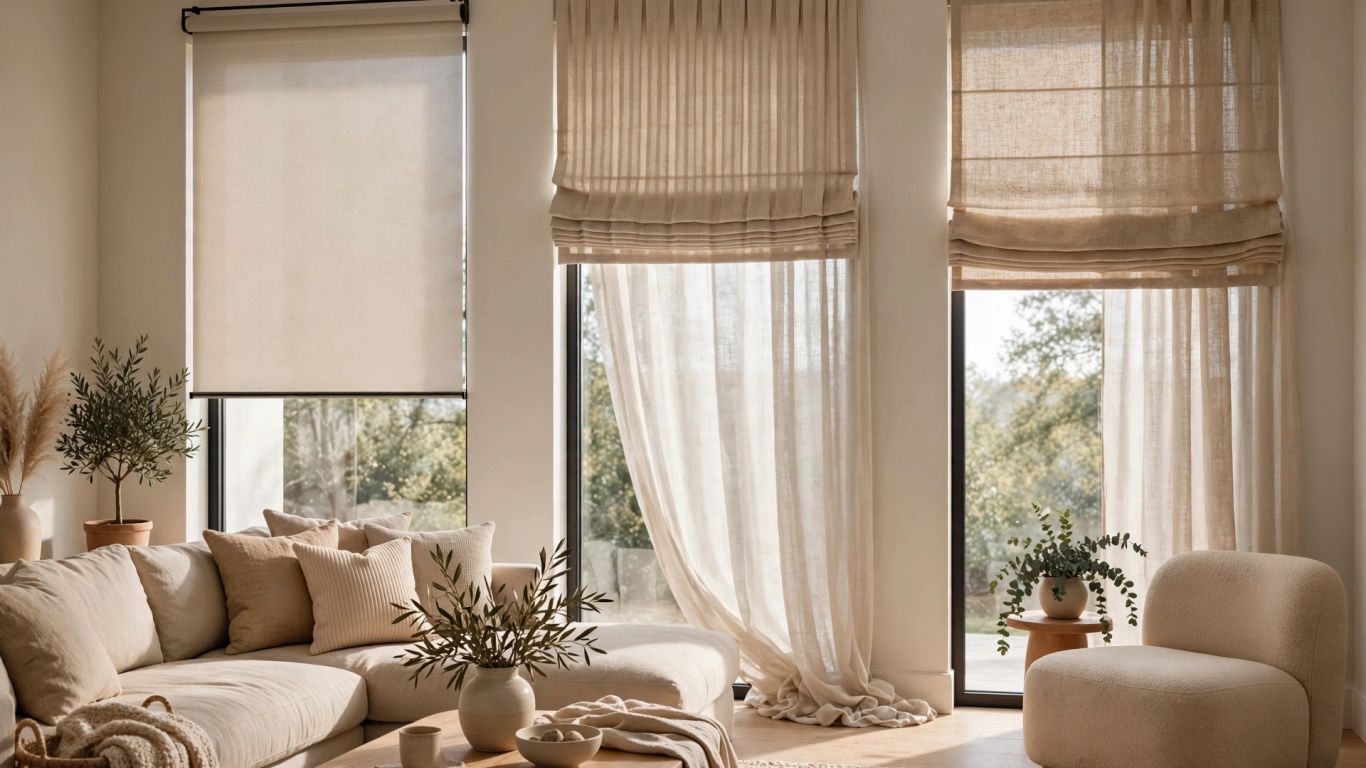
Style changes the feel of a window, but it also affects how you adjust light and how much visual texture the shade adds. A clean roller shade can sit quietly in a room, while fabric folds or alternating bands become part of the decor. Made in the Shade North Jersey describes Banded Zebra Shades as having alternating solid and sheer fabric bands that can be adjusted for light and privacy. The right style is the one whose everyday operation suits the room as well as its appearance.
Roller shades for a clean, simple look
Roller shades have a straightforward profile: the material rolls up neatly when raised. That simplicity works well when you want the window treatment to blend into a room rather than add much visual detail. Fabric choice still matters, since a light-filtering roller shade and a blackout version serve different needs even when the shape is similar.
Sheer shades for a soft, airy feel
Sheer shades are a natural fit when the priority is a light, open atmosphere. Their lightweight, translucent fabric lets daylight filter through and softens its effect, though privacy is limited compared with a more opaque treatment. They can be a good choice for a room where a gentle glow matters more than a clear view being fully hidden.
Banded shades for adjustable light and privacy
Banded shades use alternating sheer and opaque sections, which shift in relation to one another as the shade is adjusted. This allows you to change the balance of light and coverage through the day. Made in the Shade North Jersey presents Banded Zebra Shades as an option for adjustable light control and privacy; consider how often you expect to change the setting before choosing this style.
A banded design also gives a window a distinct, modern pattern, so it may be more visually prominent than a plain roller shade. Compare samples against the room’s other lines and textures to see whether that contrast feels right.
Roman and pleated shades for added texture
Roman shades gather into soft folds as they rise, bringing a fabric-forward look to the window. Pleated shades add their own repeating texture and can feel tailored without looking overly formal. Both styles can make a simple window treatment feel more decorative, so let the room’s existing fabrics and furniture guide the choice.
Choosing the right light and privacy level
A shade that feels right at noon may behave differently at dusk, when indoor lights come on and the window becomes more visible from outside. Start with what the room needs most: comfortable daylight, reduced glare, privacy, or darkness. Then decide which needs are essential and which are preferences. That order keeps a pretty fabric from becoming a frustrating daily choice.
Balance daylight with daytime privacy
During daylight, a light-filtering fabric can let the room remain bright while making the interior less exposed than it would be behind bare glass. The amount of privacy varies with the fabric and the difference in light between indoors and outdoors. If a window faces a close neighbor or a walkway, test the view from outside as well as from inside before settling on a sheer option.
Reduce glare on screens and reflective surfaces
When direct sun lands on a monitor or television, softening the light can make the space more comfortable to use. Made in the Shade North Jersey offers Solar Shades designed to filter harmful UV rays while preserving the view; the source also describes them as reducing glare and heat. Consider the direction and time of the strongest sunlight, since a shade’s fabric choice should match the conditions at that particular window.
Consider nighttime privacy and nearby sightlines
Light-filtering fabric may offer a useful daytime veil, but it usually should not be assumed to provide the same coverage after dark. With lamps on, people outside may be able to see more of the room than they could in daylight. Stand at likely sightlines after sunset, or recreate those conditions before deciding whether a denser fabric or an additional layer is needed.
Add a liner when you need more light control
A liner can change how a shade performs without changing its outward style. Depending on the construction, a light-filtering liner can soften the light further, while a blackout liner is intended for much greater light control. This can be useful when the look of a fabric is right but its unlined version does not meet the room’s practical needs.
Finding the right shades for each room
The same treatment does not have to work everywhere in a home. A living room may benefit from a soft view of the outdoors, while a bedroom or kitchen has different demands. Look at the room’s sunlight, how often people use it, and what happens near the window. Those everyday details are a better guide than choosing one style for the entire house.
Choose comfortable light for living and dining areas
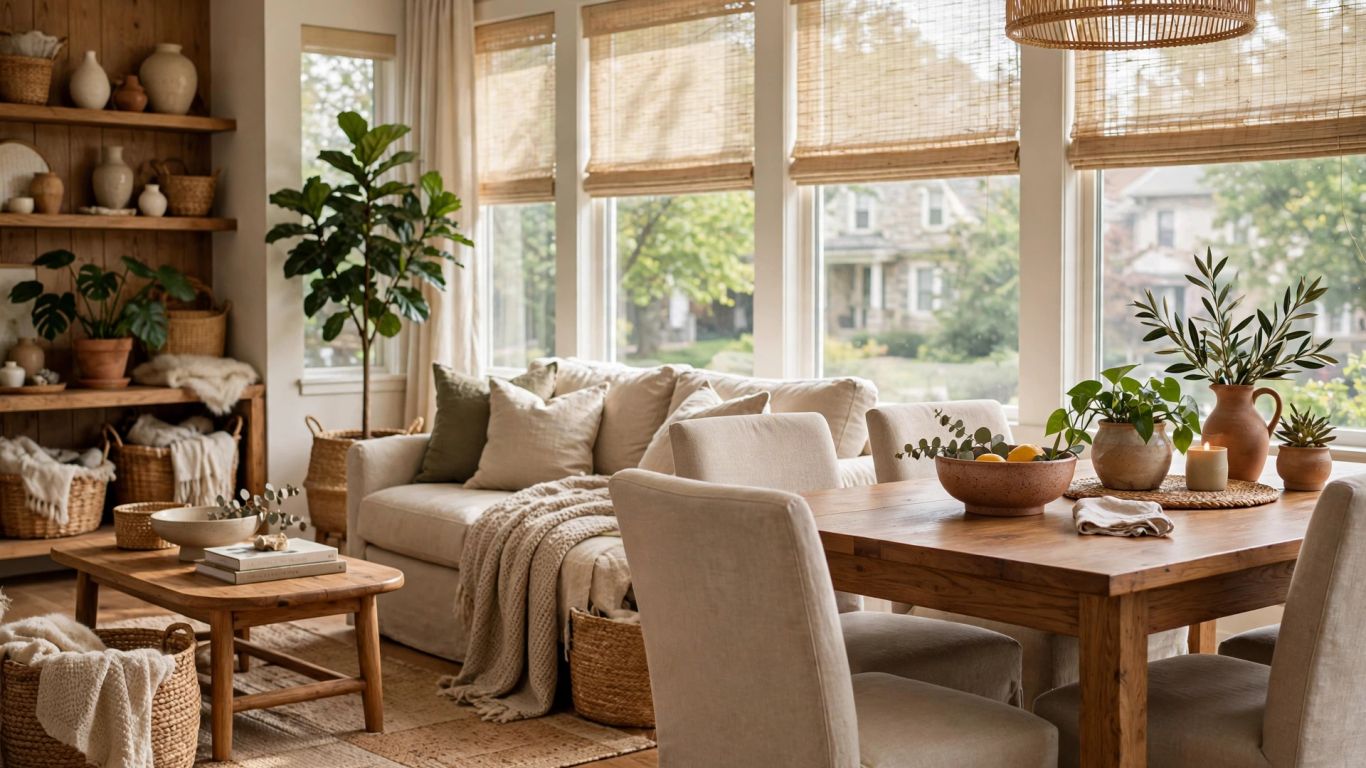
In shared spaces, filtered daylight can keep the room feeling open while reducing the sharpness of direct sun. Sheer or light-filtering fabrics can suit a dining area where a soft glow is welcome; a more adjustable option may be preferable if the sun shifts onto a television or dining table. Let the view, furnishings, and time of day shape the final choice.
Manage screen glare in a home office
An office needs light that supports screen use without making the room feel closed in. Before selecting a shade, note when glare appears and whether it comes from one window or several. A simple checklist can make the decision easier:
- Identify which windows send direct light toward the screen.
- Check the view and brightness at the hours you usually work.
- Decide whether you need flexible adjustments or a consistent softened light.
- Consider whether evening privacy matters in the same room.
Once you know which issue is most disruptive, compare fabrics for that specific window rather than assuming every office needs the same level of coverage. A shade that handles the strongest glare while preserving comfortable daylight is often a more useful fit than one chosen for appearance alone.
Decide whether bedrooms need room-darkening options
Light filtering can be pleasant in a bedroom during the day, but it may not provide enough darkness for sleep. If streetlights, early sun, or a nearby building are concerns, consider room-darkening or blackout options instead. You can also decide whether a separate liner would give you the extra control you need while keeping a softer look in daytime.
Select moisture-appropriate materials for kitchens and bathrooms
Kitchens and bathrooms can expose window treatments to moisture, cooking residue, or frequent cleaning. Choose materials according to their stated care instructions and the conditions near the window, especially if it sits close to a sink or shower. If ventilation is limited, favor a practical, easy-to-maintain option over delicate fabric that needs more careful handling.
Materials, colors, and custom options
Fabric changes both the mood of a room and the way light feels once it passes through the window. Color, texture, and pattern also affect whether a shade blends in or becomes a feature. Think about the treatment alongside wall color, flooring, and nearby upholstery. A few deliberate choices usually work better than trying to match every detail exactly.
Compare fabric textures, colors, and patterns
Smooth, plain fabrics tend to feel quiet and contemporary, while visible texture can add warmth to a room with simple furnishings. Light colors often keep a window looking airy, and deeper tones can make it feel more grounded, but the actual effect depends on surrounding decor and daylight. Look at samples near the glass, where the light can reveal differences that are easy to miss indoors.
Match shade proportions to window size and decor
A shade should look balanced against the window and the room around it. A compact window may feel crowded by a heavy pattern, while a large expanse of glass can make a very subtle fabric seem almost invisible. Consider trim, nearby doors, and any view you want to keep prominent before choosing the shade’s visual weight.
Consider cordless, motorized, and smart controls
The best control is one that fits how you use the window. Cordless operation can reduce visible cords, while motorization can be convenient for windows that are tall or hard to reach. Made in the Shade North Jersey describes electric window shades as connectable to a smart home, so check which control options are available for the particular shade you are considering rather than assuming every style has the same setup.
Measuring, installation, and care
A well-chosen shade still needs to fit the window and operate smoothly. Measure carefully, check what might interfere with the hardware, and read the care guidance for the selected material. These steps are not glamorous, but they prevent many avoidable surprises. When you want help weighing custom options, you can request information before making a final decision.
Measure inside-mount and outside-mount windows
An inside mount sits within the window frame and gives a neat, built-in appearance when the opening allows it. An outside mount attaches beyond the frame and can be useful when you want more coverage or the inside space is limited. Follow the measurement instructions for the specific product, and record width and height in the requested locations rather than relying on a single measurement.
Check for obstructions and unusual window shapes
Handles, locks, deep sills, trim, and nearby doors can all affect how a shade fits or moves. Note anything that projects into the space where the treatment will sit. Arched, angled, or unusually large windows may need a product designed for that shape, so confirm the available options before assuming a standard rectangle will work.
Clean shade fabric according to its care instructions
Cleaning methods vary by fabric and construction, so follow the product’s care instructions rather than using a one-size-fits-all approach. Regularly removing dust with an approved method can help keep a shade looking fresh. Test any recommended cleaning technique in an inconspicuous area if the instructions allow it.
Review fit and operation before finalizing installation
After installation, raise and lower the shade through its full range and check that it moves evenly. Look for gaps, rubbing, or contact with handles and trim. A careful final review lets you catch a fit issue while adjustments are still straightforward.
Conclusion
The best light filtering shades soften daylight in a way that suits the room, without asking one window treatment to do every job. Compare opacity, privacy, style, and daily use before deciding, then check the fit and controls. If you would like a guided look at custom window treatments for your home, ask about seeing options in your own space and choose with more confidence.
Frequently Asked Questions
Do light filtering shades provide privacy?
They can offer some privacy during the day, but the level depends on the fabric and lighting. At night, indoor lights can make a room more visible from outside.
Do light filtering shades make a room dark?
They soften incoming daylight but are not designed to create complete darkness. Room-darkening or blackout options are better when reducing light substantially is the priority.
Are sheer shades the same as light filtering shades?
Not necessarily. Sheer shades use lightweight, translucent fabric and generally prioritize a soft, airy look, while light-filtering fabrics vary in openness and coverage.
Which shade style is easiest to keep visually simple?
A roller shade has a clean profile and can blend into the window area. Fabric, color, and opacity still affect how noticeable it looks.
Can I use light filtering shades in a bedroom?
Yes, if soft daylight and a lighter feel are suitable for the room. If you need stronger darkness for sleep, consider room-darkening or blackout options.
Do light filtering shades work for home offices?
They can help soften daylight, but the right choice depends on where glare falls and how much privacy you need. Check the window at your usual working hours.
How should I clean light filtering shades?
Use the cleaning method specified in the shade’s care instructions. Materials differ, so avoid assuming that a method safe for one fabric is suitable for another.