
Key Takeaways
Wood blinds pair natural character with adjustable light and privacy, but the best choice depends on the room, window, and how you use it.
- Choose real wood for natural grain and warmth; consider faux wood where moisture is a concern.
- Slat width affects the look of the window and how much light you can direct.
- Coordinate stain or paint with the room’s trim, floors, and furnishings.
- Think through mounting depth, measuring, and controls before ordering.
- Dust regularly and keep real wood away from persistent moisture and intense sun.
Why choose wood blinds for your home
Wood blinds can make a room feel warmer without adding much visual weight. Their adjustable slats give you a practical way to manage daylight and privacy throughout the day. The right finish can also connect a window to other materials in the room, from painted trim to natural wood furniture.
Natural warmth and timeless appeal
Real wood has grain and subtle variation that bring a natural quality to a window. It can feel at home in a traditional room, but a restrained stain or painted finish also works in a cleaner, more contemporary space. Made in the Shade offers Wood Blinds made from genuine hardwoods, with a range of stains, paint finishes, and slat sizes to customize.
Light control and everyday privacy
Tilt the slats open to let daylight in while softening its direction, or close them for more privacy. They’re useful when a room needs both: a clear view of the day outside and less visibility from the street. Adjustable slats make the difference between simply covering a window and shaping how the room feels at different hours.
How wood blinds complement different decor styles
A warm stain can echo wood floors or furniture, while a painted finish can blend with trim for a quieter effect. In a room with patterned fabrics or detailed furnishings, simple blinds can keep the window from competing for attention. For a closer look at the range of finishes and styles, this wood blinds overview is one useful reference.
Whether the room leans classic, modern, or somewhere between, it helps to choose a finish that relates to one or two existing elements rather than matching everything exactly. That small bit of contrast often gives the window a more considered look.
Real wood vs. faux wood blinds
The choice between real and faux wood is mostly about the room’s conditions and the look you want. Real wood has natural grain, while faux wood offers a wood-like appearance and is more resistant to moisture and damage. Neither option is automatically right for every window, so consider humidity, sunlight, and daily use together.
Key differences in appearance and construction
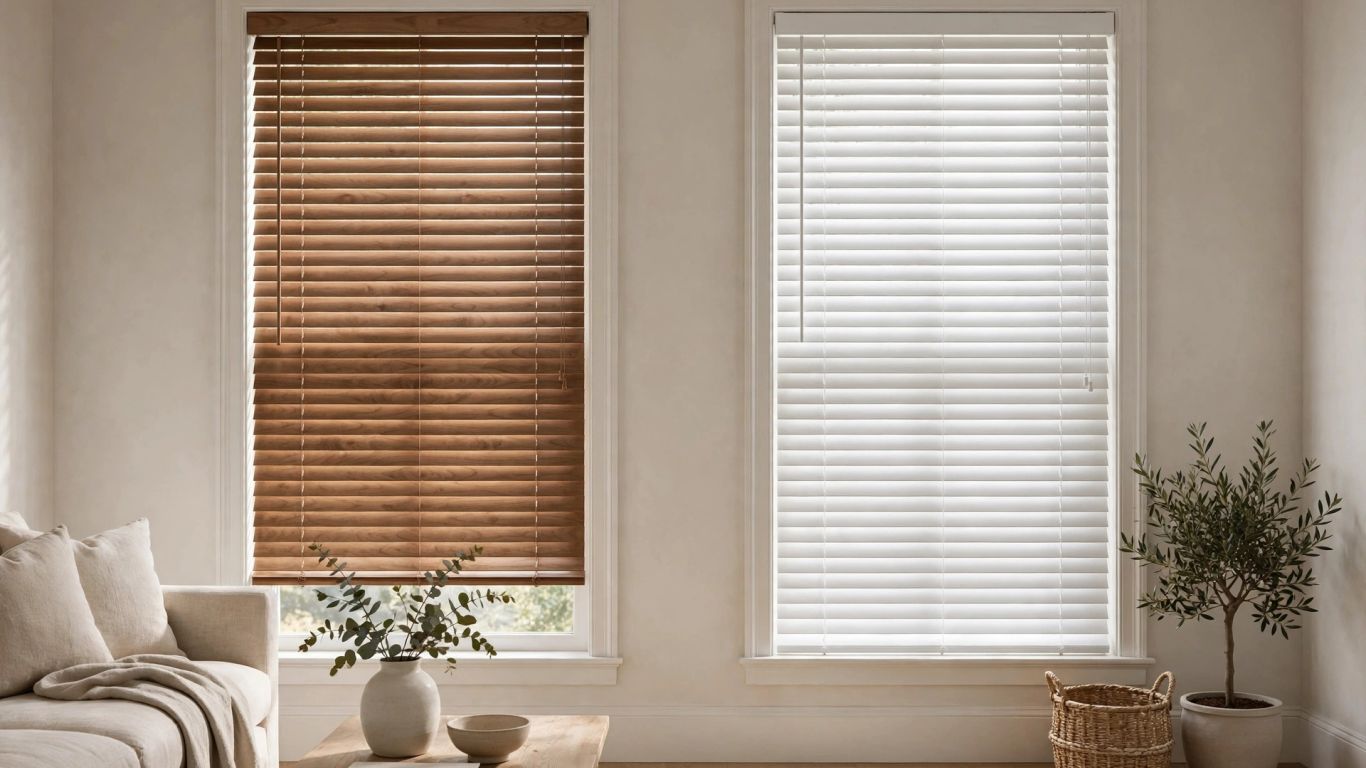
Real wood brings the visible grain and natural variation of hardwood. Faux wood is designed to resemble wooden blinds, with a more uniform surface. If you like the look of painted trim or want the window to read as a clean, consistent plane, faux wood may suit the room; if natural material and grain are important, real wood may feel more distinctive.
Which option works best in humid rooms
Wood can be affected by prolonged exposure to damp conditions, so it is worth being careful around a steamy shower or a frequently wet sink. Faux wood is the more practical option in those settings. Made in the Shade Faux Wood Blinds resemble wooden blinds and are more resistant to moisture and damage, making them a fitting choice to consider for kitchens and bathrooms.
Comparing durability, maintenance, and cost
Both materials need routine dusting, but the room environment can influence how well a treatment holds up over time. For a useful comparison, the key questions are less about a universal ranking and more about where the blinds will be installed.
| Consideration | Real wood | Faux wood |
|---|---|---|
| Appearance | Natural grain and variation | Wood-like, typically more uniform |
| Humidity | Better suited to drier rooms | More resistant to moisture |
| Upkeep | Dust gently; avoid persistent dampness | Dust regularly; suitable for humid areas |
| Cost | Varies with material and customization | Varies with style and options |
Use the table as a starting point, not a verdict: the window’s exposure and your preferred finish still matter. You can also compare faux wood blinds when you’re weighing a wood-like appearance against a moisture-resistant option.
How to choose slat size and finish
Slat size and finish change the character of the whole window, even when the blind itself is a simple design. Start with the room’s proportions, then consider whether you want the blinds to stand out or recede into the trim. A sample viewed in the actual room can be more helpful than a color choice made from memory.
Narrow vs. wide slats
Narrow slats create a finer, more detailed pattern across the window. Wider slats tend to look more open and can suit larger windows, where a very fine pattern might feel busy. The best choice depends on the window scale and how prominent you want the blinds to be.
| Slat choice | Visual effect | Often suits |
|---|---|---|
| Narrow | More closely spaced lines | Smaller windows or a detailed look |
| Medium | A balanced, familiar proportion | Many everyday window sizes |
| Wide | Broader, more open lines | Larger windows or a simpler look |
Treat those as design cues rather than hard rules. Looking at the window from across the room can help you see whether the slat pattern feels in proportion.
Stains, painted finishes, and color coordination
Stains show the character of the wood and can connect the blinds with floors, furniture, or other natural finishes. Paint creates a more uniform color and can blend with trim or provide a deliberate contrast. Made in the Shade offers Wood Blinds in stains and paint finishes, with customization options to suit your preferences.
Matching blinds to window size and room style
A large window can carry a stronger grain or a wider slat without overwhelming the room; a smaller opening may look calmer with a lighter finish. Consider nearby materials, too. Matching the blinds exactly to the floor is not essential, but repeating a warm or cool undertone can make the room feel more cohesive.
Choosing wood blinds for each room
A good choice for one room may not be right for the next. Bedrooms often call for more privacy, while living spaces need a balance between daylight and glare control. Kitchens and bathrooms bring moisture into the equation, so the material deserves extra thought there.
Creating a comfortable bedroom
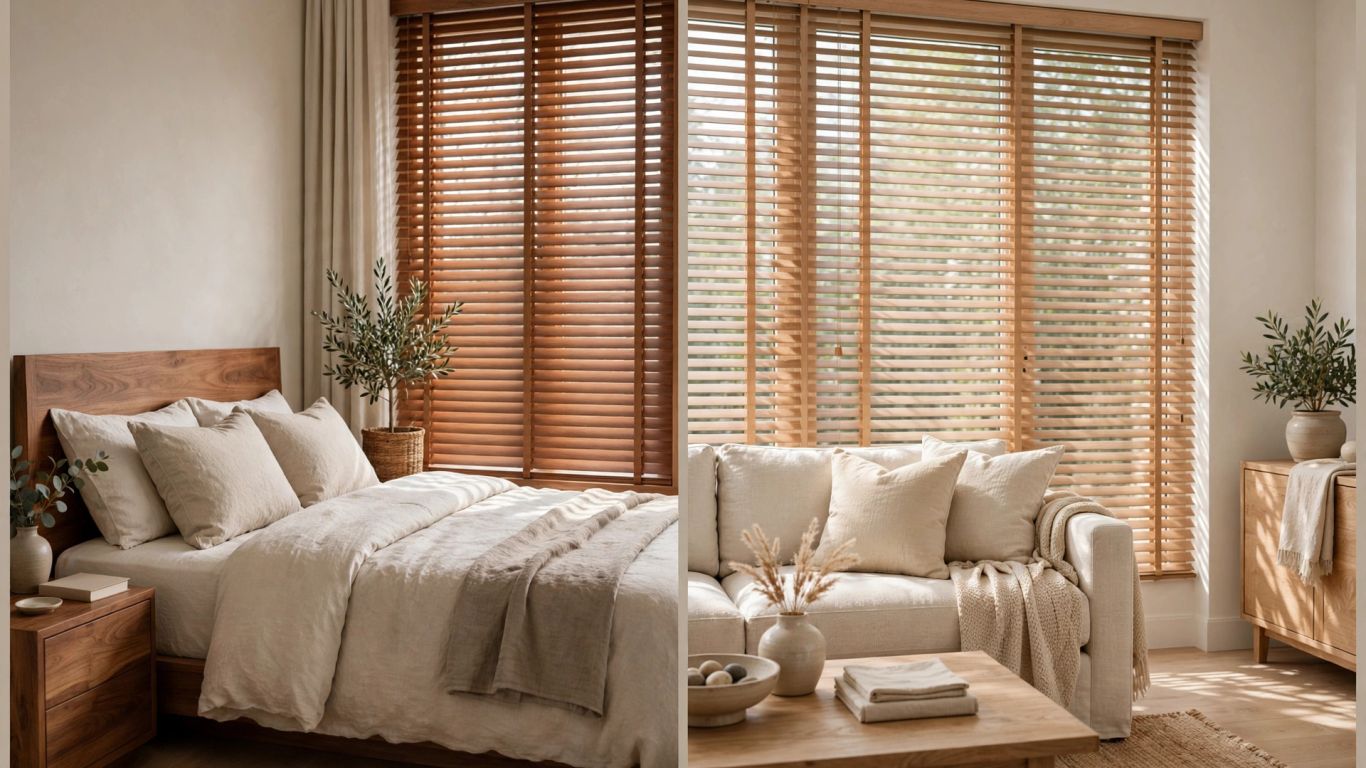
Wood blinds can provide privacy and let you adjust the amount of daylight that enters in the morning. If you are sensitive to light, remember that blinds alone may not make a room completely dark; consider how the window faces and whether another window treatment is needed. A softer stain or painted finish can keep the room settled rather than visually busy.
Managing sunlight in living rooms and home offices
In a living room, tilting the slats can help reduce glare while leaving some daylight in the space. At a desk, it can be useful to adjust the angle as the sun moves, especially if the screen faces a window. Think about the view as well: a setting that softens direct sun without closing the blinds completely may feel more comfortable for much of the day.
When kitchens and bathrooms call for faux wood
Steam, splashes, and frequent changes in humidity make kitchens and bathrooms tougher settings for real wood. Faux wood is more resistant to moisture and damage, so it is often the sensible choice near sinks or in a bathroom. For other rooms, choose according to the look you prefer and the conditions at the window.
Getting the right fit and operation
Even a beautiful finish can disappoint if the blind does not sit well in the window or is awkward to operate. Decide whether you want the treatment fitted inside the frame or mounted over it, then measure carefully and consider how often you will adjust it. Custom sizing and professional measuring can take some uncertainty out of the process.
Inside-mount and outside-mount options
An inside mount sits within the window frame and gives a neat, built-in appearance when the frame has enough depth. An outside mount attaches over the opening, which can help cover a shallow frame or create the impression of a larger window. Check nearby handles, trim, and any obstructions before settling on either approach.
Measuring windows for a custom fit
Measure every window individually, even if several appear to be the same size; small differences are common. Note the frame’s depth and any hardware that could interfere with the blind. Before ordering, it can help to take a few practical steps:
- Measure the width at the top, middle, and bottom of the opening.
- Measure the height at the left, center, and right.
- Record the frame depth and nearby handles or trim.
- Confirm whether the measurements are for an inside or outside mount.
Write down the measurements clearly and double-check them before placing an order. If you would rather have help with the details, you can book an in-home consultation for professional measuring and installation.
Choosing cordless or motorized controls
Think about who will use the blinds and how often they need adjustment. Cordless lift options can keep the window area looking cleaner, while motorization may make operation more convenient in harder-to-reach locations. For Wood Blinds, Made in the Shade lists cordless lift options and motorization compatible with home automation systems.
Caring for wood blinds over time
A little regular care helps blinds stay presentable without turning cleaning into a project. Dust tends to collect on the horizontal slats, so a quick, gentle routine is more useful than waiting for a deep clean. Pay particular attention to moisture and direct sun if the blinds are made of real wood.
Dusting and routine cleaning
Close the slats in one direction and dust them gently, then tilt the slats the other way and repeat. A soft cloth or duster helps avoid scratching the finish. For routine upkeep, work from the top of the blind downward so loosened dust does not settle on slats you have already cleaned.
Handling stains and everyday wear
For a mark, begin with a dry, soft cloth rather than applying a wet cleaner immediately. If the finish allows it, use a lightly dampened cloth and dry the area promptly; avoid soaking the slats or using abrasive products. Moving the blinds carefully and keeping cords or controls unobstructed can also reduce everyday strain.
Protecting wood blinds from moisture and direct sun
Keep real wood away from repeated splashes and persistent humidity, especially near sinks and showers. Strong direct sunlight can gradually affect finishes and nearby furnishings, so tilt the slats to manage the light when needed. A simple habit of checking the window area for condensation or dampness can help you spot a problem early.
Conclusion
The right wood blinds balance the material, finish, slat size, and operation with the needs of each room. Take time to consider the window’s conditions and the look you want, and the decision becomes much less complicated.
See It, Feel It, Get It Right
If you are choosing treatments for a North Jersey home, request information or arrange a free in-home consultation to see options in your space and get professional measuring and installation.
Frequently Asked Questions
Are real wood blinds suitable for every room?
They can work in many rooms, but persistent moisture makes kitchens and bathrooms less suitable. Consider faux wood in areas where humidity or splashes are common.
What is the main difference between real wood and faux wood blinds?
Real wood has natural grain and variation. Faux wood is made to resemble wood and is more resistant to moisture and damage.
Do wider slats make a room look different?
Yes. Wider slats create broader lines and can look more open, while narrower slats create a finer pattern. Window size and the room’s style help determine which feels balanced.
Can wood blinds provide privacy?
Tilting the slats can reduce visibility into a room while still allowing some daylight. Closing them provides more privacy, though the exact effect depends on the angle and the window’s surroundings.
Are wood blinds a good choice for bedrooms?
They can be, particularly when privacy and adjustable daylight are priorities. If you need near-total darkness, consider whether an additional treatment is needed.
How should wood blinds be cleaned?
Dust them regularly with a soft cloth or duster. For marks, start gently, avoid soaking the slats, and dry any lightly dampened area promptly.
Should blinds be inside-mounted or outside-mounted?
An inside mount gives a neat fit within a sufficiently deep frame. An outside mount can work when the frame is shallow or when you want the treatment to cover more of the opening.