
Key Takeaways
A comfortable patio starts with shade that fits the way you use the space. A few careful measurements and practical choices can make the difference between a canopy that works and one that gets in the way.
- An offset umbrella keeps a center pole out of the seating area.
- Measure both the canopy footprint and the clearance around it.
- Frame material, canopy fabric, and color all affect upkeep and appearance.
- Choose a base and mounting method suited to the umbrella and its exposure.
- Close the canopy in windy conditions and check the care guidance for your model.
How cantilever umbrellas work
A cantilever umbrella supports its canopy from a side post and arm rather than a pole in the middle of the shaded area. That makes it easier to arrange chairs or a dining table beneath the canopy. The best design for your patio depends on the shape of the space, where the sun falls, and how much flexibility you want. Think of the umbrella as part of the layout, not a standalone accessory.
Offset design keeps the space beneath the canopy open
With the support post set to one side, the shaded area stays clear of a center pole. That can be especially useful over a dining table, lounge chairs, or a conversation area where people need room to move. The trade-off is that the side arm and base occupy space beyond the canopy’s edge. Before choosing a location, picture both the shaded footprint and the space the frame needs beside it.
Common canopy shapes and how they affect coverage
Round, square, and rectangular canopies create different coverage patterns, so start with the shape of the furniture you want to shade. A round canopy can suit a compact seating group, while a rectangular one may align more neatly with a long table or sofa. Some product ranges include canopy shapes such as round, square, and rectangular designs. Check the canopy’s dimensions rather than relying on its label alone; similar-sounding shapes can cover different amounts of space.
How tilt and rotation help you follow the sun
The sun moves, and a fixed canopy can leave part of the seating area exposed by late afternoon. Tilt lets you angle the canopy, while rotation can help redirect coverage without moving the furniture. These features are useful when the umbrella serves more than one part of a patio during the day. They do not replace thoughtful placement, but they can make a well-sited canopy more adaptable.
Choosing the right size and placement
Sizing is not just a matter of picking the largest canopy that fits. The umbrella needs to shade the activity area while leaving room for its base, arm, and everyday movement around the patio. Take measurements at the times you are most likely to use the space, since a useful patch of shade can shift as the sun moves. A quick layout on paper can spare you from an awkward fit later.
Measure the area you want to shade
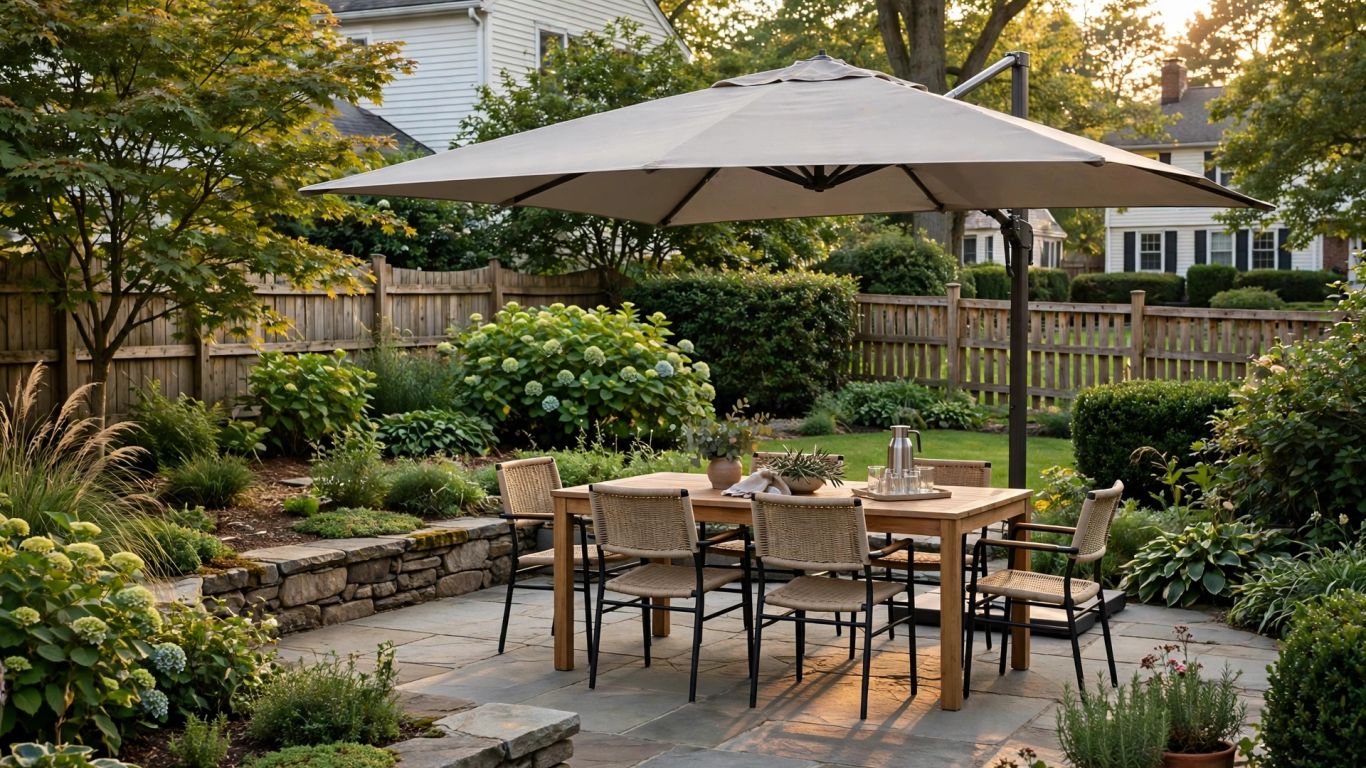
Measure the furniture grouping first, including the space people need to pull out chairs and walk around. Then compare that footprint with the canopy dimensions and note where the post and base would sit. Account for the canopy’s height and any nearby structure that could limit its movement. For a more tailored outdoor-shade option, Made in the Shade North Jersey offers exterior shades in a selection of colors and materials designed for patios, decks, and balconies.
Match canopy coverage to seating and dining layouts
A canopy should shade the places where people sit, not just the center of the patio. For dining, allow coverage beyond the tabletop so chairs remain in shade when occupied; for a lounge area, consider the full length of the seating. The comparison below is a starting point, not a substitute for checking a specific model’s dimensions.
| Patio use | Layout to measure | Placement consideration |
|---|---|---|
| Bistro table | Table and occupied chairs | Leave room to pull chairs back |
| Dining set | Table and full chair clearance | Check coverage at the outer seats |
| Lounge seating | Sofa or chairs with side tables | Shade the main seating area |
| Poolside chairs | Recliners and walking route | Keep access paths clear |
Use the table to identify what needs shade, then confirm the canopy dimensions against the actual furniture. If a patio has several separate activity areas, one umbrella may not cover them all comfortably. In that case, decide which spot matters most before sizing up.
Check clearances around walls, doors, and walkways
Open doors, sliders, and gates fully while checking the proposed umbrella location. Make sure the arm will not cross a walkway or interfere with a railing, and leave a clear route around the base. Also consider where the canopy sits when tilted or rotated, not only its position when open in one direction. A few minutes spent testing these clearances can prevent daily annoyances.
Comparing frames, canopies, and finishes
The frame and canopy determine how an umbrella looks and what kind of care it may need. Materials vary by model, so compare the specifications and maintenance instructions rather than assuming every option behaves the same way. Your local weather, the amount of sun the patio receives, and how often you plan to leave the canopy open all matter. The right choice is usually the one you are comfortable maintaining.
Choose a frame material for your climate and upkeep preferences
Aluminum is a common choice for outdoor umbrella frames, while some models use other materials or combinations. Look for clear care guidance and check the finish for signs of wear as part of regular upkeep. If the umbrella will stay outside through changing weather, read the manufacturer’s recommendations about exposure and storage. A finish that suits the patio should also be practical to keep clean.
Compare canopy fabrics for UV protection and fade resistance
Canopy fabrics differ in their documented UV protection, colorfastness, and cleaning guidance, so compare product specifications rather than judging by appearance alone. For another kind of outdoor shade, Made in the Shade North Jersey offers Exterior Shades described as providing UV protection, reducing glare, and enhancing privacy. That is a separate solution from a freestanding umbrella, but it can be worth considering when the goal is shade along a patio edge or balcony. Choose fabric based on the conditions it will face and the care you are willing to provide.
Coordinate colors and shapes with your outdoor space
A canopy can either blend with the house and garden or provide a deliberate accent. Take color cues from outdoor cushions, railings, and exterior finishes, and look at samples in the light where the umbrella will sit if possible. Shape matters visually, too: a rectangular canopy may echo a long table, while a round one can soften a compact seating area. Keep the overall palette simple enough that the umbrella feels connected to the rest of the patio.
Selecting a stable base and safe setup
A cantilever umbrella places its canopy off to one side, so the base and mounting method deserve careful attention. Use the model’s instructions to choose a compatible base, and follow its setup requirements rather than relying on a general rule of thumb. The site also matters: a sheltered corner and an exposed deck do not face the same conditions. If anything about the installation is unclear, ask the seller or installer before opening the canopy.
Match the base weight to the umbrella’s size and exposure
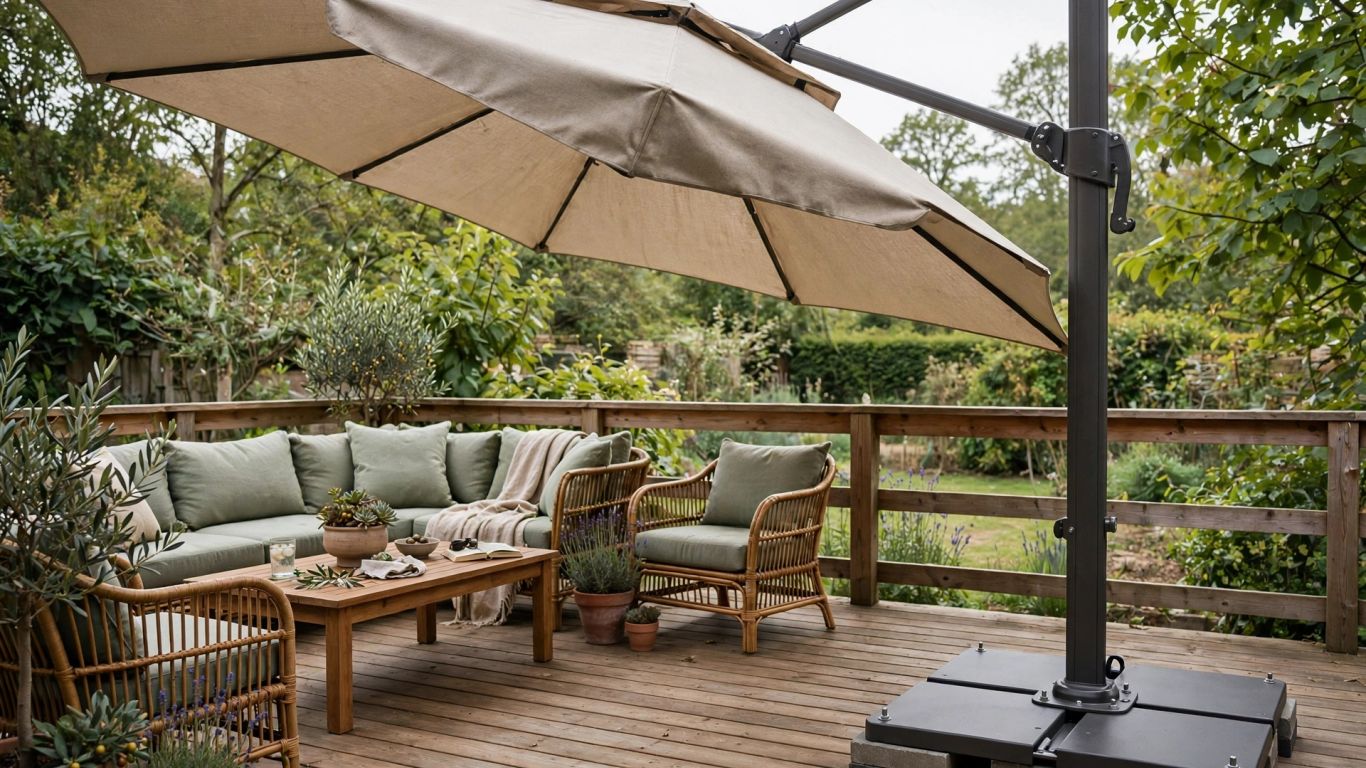
Base requirements vary with umbrella size, design, and the conditions around it. Check the product guidance for the recommended base or anchoring arrangement, and verify that the surface can support the installation. Keep the base on a stable, level area and avoid placing it where people could trip over it. Do not substitute a convenient-looking weight for the setup specified by the manufacturer.
Consider in-ground and deck-mounted installation options
A portable base gives you flexibility, while a fixed installation may suit a patio where the umbrella will stay in one place. The right option depends on the model, the deck or ground construction, and whether the installation can be securely completed. Before drilling or setting an in-ground mount, confirm the location and installation requirements. Consider future access, too: a permanent position is less forgiving if you later change the furniture layout.
Know when wind makes it safer to close the canopy
Wind can catch an open canopy, and no base makes every condition safe. Follow the model’s stated wind guidance, close the umbrella when conditions become gusty, and secure it as directed when it is not in use. It helps to make closing the canopy part of your routine before leaving the patio or when weather changes. A little caution protects both the umbrella and the surrounding space.
Exploring operation and convenience features
The way an umbrella opens and adjusts affects how likely you are to use it regularly. Consider who will operate it, how often the canopy needs repositioning, and whether the mechanism is easy to reach from the seating area. Basic operation may be all you need for a small patio, while a larger or more frequently used space can benefit from convenient adjustments. Try the mechanism in person if you have the chance.
Choose between manual and crank-operated models
Manual mechanisms can be straightforward, but the effort required varies by design and canopy size. A crank can make opening and closing more manageable; check how it feels to operate and whether it can be reached without moving furniture. Keep the operating instructions nearby and avoid forcing a mechanism that feels stuck. Smooth, simple operation is more valuable than a feature you rarely use.
Weigh the benefits of tilt and 360-degree rotation
Tilt can help keep low-angle sunlight off the seating area, and rotation can redirect shade as the sun moves. These adjustments are most useful when they are easy to make and the umbrella has enough room to move safely. For a patio that sees varied use through the day, Made in the Shade North Jersey describes its Outdoor Retractable Awnings as adjustable by button or crank and able to retract completely. An awning is not a cantilever umbrella, but that flexibility may suit a space where opening and clearing the overhead shade is a priority.
Consider built-in lighting and replacement canopy options
Built-in lighting can extend the hours you use a patio, though it is worth checking how the lights are powered and maintained. Before buying, also ask whether replacement canopy fabric is available for the model and how it is fitted. A replaceable canopy may help you maintain the umbrella without replacing the entire frame, but availability depends on the product. Confirm these details in the manufacturer’s documentation.
Caring for your cantilever umbrella
Routine care helps keep the canopy and frame ready for the next sunny day. Follow the care instructions supplied with your model, since fabrics and finishes can have different requirements. It is also wise to close and secure the umbrella when it is not in use, especially when weather is changing. Small checks are easier than dealing with a stuck mechanism or damaged fabric later.
Clean and dry the canopy before storing it
Remove loose debris with a gentle brush and clean the fabric according to its care label. Let the canopy dry fully before covering or storing it, since putting it away damp can encourage mildew. Avoid harsh cleaners unless the manufacturer specifically approves them. A soft approach protects the fabric and its finish.
Protect the frame and fabric during harsh weather
Use the storage cover supplied or recommended for the umbrella, and follow the instructions for seasonal storage. Close the canopy when it is not in use and during conditions that call for it to be secured. If you expect an extended period of harsh weather, check whether the manufacturer recommends removing or storing particular parts. Keeping the umbrella protected is simpler than repairing damage after a storm.
Inspect moving parts and fasteners regularly
Every so often, look over the joints, fasteners, arm, and opening mechanism. Check for looseness, corrosion, or wear, and address issues according to the product instructions. Do not use the umbrella if a part appears damaged or unstable. A short inspection before opening it can catch problems early.
Plan Your Outdoor Upgrade
For help comparing outdoor shade options, Made in the Shade North Jersey offers free in-home consultations, professional measuring, and installation. You can request information and discuss what may suit your patio, deck, or balcony.
Conclusion
The best cantilever umbrella is one that fits the furniture, leaves comfortable room to move, and can be set up and cared for according to its instructions. Measure the space, compare the details that affect everyday use, and make safety part of the decision from the start. With those basics in place, it is much easier to choose shade that feels natural on your patio.
Frequently Asked Questions
What is a cantilever umbrella?
A cantilever umbrella has a side post and supporting arm that hold the canopy over the shaded area, leaving the center beneath it open.
How do I choose the right size cantilever umbrella?
Measure the furniture and the space people need to move around it, then compare those measurements with the canopy dimensions and the product’s clearance requirements.
Are round or rectangular canopies better?
Neither shape is always better. Round canopies can suit compact seating groups, while rectangular canopies may align more easily with long tables or seating areas.
Where should I place the umbrella base?
Place it on a stable, level surface where it will not obstruct doors, walkways, or seating. Follow the umbrella’s instructions for its specific base or mounting system.
Can a cantilever umbrella stay outside in the wind?
Wind guidance varies by model and conditions. Follow the manufacturer’s instructions, and close and secure the canopy when wind makes it unsafe or when the umbrella is not in use.
How should I clean a cantilever umbrella canopy?
Use the cleaning method recommended by the manufacturer, remove debris gently, and let the fabric dry completely before covering or storing it.
Do cantilever umbrellas tilt or rotate?
Some models offer tilt, rotation, or both, while others may not. Check the individual product specifications to confirm which adjustments are available.
Still comparing options for your patio? Our free window treatment buyer’s guide walks through how to choose, and our retractable awning cost guide shows what a wall-mounted shade option runs in New Jersey.